Meritíssimo · Our dishes · Pão de queijo
Cassava starch, cured cheese and no wheat at all. The Minas Gerais cheese bread we bake every morning — where it comes from, and what people get wrong about it.
Pão de queijo is the first thing out of our oven in the morning and the last thing people grab on the way out. If you have never had one: it is not bread with cheese inside. It is a different food altogether, and the difference starts with the flour — because there is no flour.
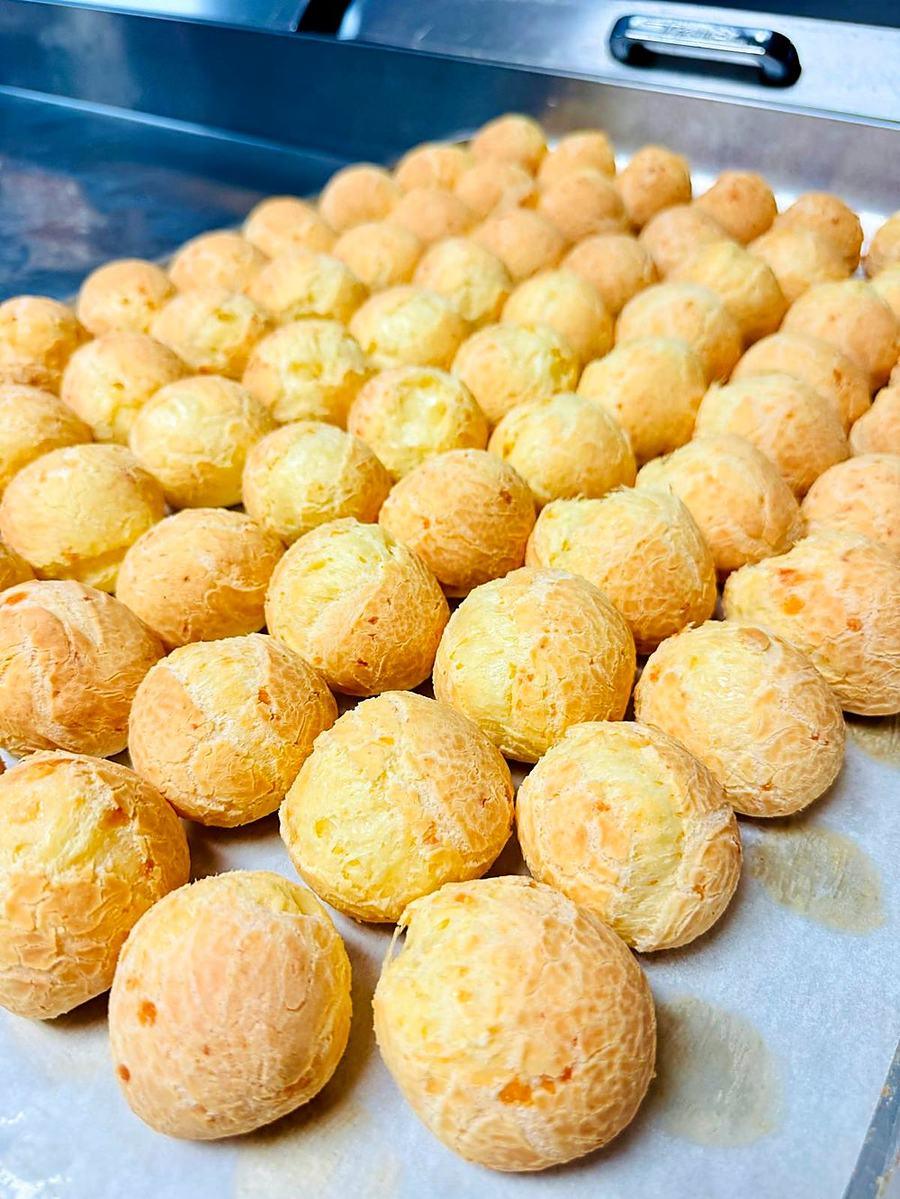
The dough is made of polvilho, the starch extracted from cassava root, scalded with milk and oil, then worked with eggs and cured cheese. No wheat. That is why the inside is elastic and chewy instead of airy, and why the shell cracks when you press it while it is still warm.
There are two kinds of polvilho, and every house picks its own balance between them. Polvilho doce gives a rounder, softer, milkier roll. Polvilho azedo, which is fermented, gives more crust, more air and that slight tang at the end. Change the proportion and you change the bread entirely — this is the part that makes one bakery taste different from the one down the street.
Pão de queijo is from Minas Gerais, the mountain state where our family cooking comes from. Researchers place it around 1750, when cassava starch started being used in Brazilian kitchens. On the farms of Minas the two ingredients were simply there: starch from the cassava, and cheese that had been curing in the pantry longer than anyone meant it to. First came plain starch biscuits. Then someone put the leftover cheese in the dough.
For two centuries it stayed a farmhouse recipe — something you made at home in Minas, not something you bought. It only became a national food in the second half of the 20th century, when mineiro cooking started being treated as heritage worth exporting. In 2024 it was named one of the best breads in the world by TasteAtlas. It took a while to leave the farm.
In Minas, pão de queijo is almost never eaten alone. It comes with coffee — strong, black, in a small cup. That pairing is a daily ritual, not a recipe: the mid-morning break, the visitor who shows up unannounced, the roadside stop.
Ask any Brazilian truck driver what a stop on the road looks like and the answer is the same everywhere in the country: coffee, and something from the counter that is still warm. That is the habit we brought with us to Fitchburg. We open at 7:00 am for exactly this reason.
It is baked and it is round, and that is where the resemblance ends. There is no wheat and no yeast in it. What makes it rise is steam and egg, not fermentation.
A story circulates that it was created by cooks working with what nobody else wanted. It is repeated a lot and documented nowhere. What the records do show is simpler and just as good: cassava starch and farm cheese met in Minas Gerais and stayed together.
The traditional recipe uses cassava starch instead of wheat flour. That does not make pão de queijo a diet food — it also contains cheese, egg and milk. We do not use wheat in its preparation, and we bake it on trays separate from wheat bread. Other wheat products are prepared in the same kitchen, so we cannot guarantee the absence of cross-contact for people with celiac disease.
We bake it through the day, so there is almost always a tray that just came out. It is $0.85 each — people buy one with coffee, or a bag of twenty for the office. If you want them hot, say so at the counter and we will pull from the tray that just came out of the oven.
Bake at home
We also sell frozen pão de queijo for you to bake at home. Put a tray in the oven, make coffee and gather everyone around the table to enjoy them while they are still warm.
Ask at the counter or call to confirm availability and the package directions before you take some home.


Want pão de queijo at home? Order it warm for pickup or ask about frozen pão de queijo to bake with the family. Call to check availability.
Order pickup See the menu (978) 855-6347At Meritíssimo, 377 John Fitch Hwy in Fitchburg. We bake pão de queijo in batches throughout the day. Check the menu for current options or order pickup online.
Preheat your oven to the temperature on the package. Space the pão de queijo apart on a baking tray while still frozen and bake for the time listed. They should puff up and turn golden outside. Take them out too soon and they may be pale, dense or a little gummy in the center. For a crisper shell, give them a little longer to turn golden, checking often, and avoid crowding the tray. Serve them warm with coffee and family around the table. Always follow the directions on the package you bought.
Our pão de queijo is made with cassava starch: we do not use wheat flour in its recipe or preparation. We bake it on trays separate from those used for wheat bread. Because other wheat products are prepared in the same kitchen, we cannot guarantee the absence of cross-contact for people with celiac disease.
Yes. Every day we are open, from 7:00 am, baked in batches through the day.
No. Pão de queijo is made with cheese, milk and egg — the cheese is the whole point of it.
Both come from cassava. Polvilho doce gives a softer, rounder roll; polvilho azedo is fermented and gives more crust, more air and a slight tang. Most recipes use a mix, and the proportion is what makes each bakery taste like itself.
Yes — coffee is at the counter all day, and coffee with pão de queijo is how it is eaten in Minas Gerais.
Since October 11, 1994
Argemiro left the truck behind to be near his children. Salomé cooked the first plate — two reais and fifty cents. Since 1994, the same family serves the same food, now in Fitchburg too.
Read our story