Meritíssimo · Our dishes · Feijão tropeiro
Beans, cassava flour, pork and egg finished in one pan. The road food of the men who crossed Brazil on mule trains — and the plate that explains Minas Gerais.
If there is one plate that explains Minas Gerais, it is this one. Feijão tropeiro is beans, cassava flour, bacon, sausage, egg and collard greens, all finished together in the same pan. It is dry where feijoada is wet, and it was built that way on purpose — by men who had to eat on the road.
In the 1700s and 1800s, before roads and trucks, goods crossed Brazil on the backs of mules. The men who drove those mule trains were the tropeiros. They moved gold, salt, cloth and cattle between Minas Gerais, São Paulo and Goiás, and they were gone for weeks at a time.
Everything they carried had to survive that: dried beans, toucinho (cured pork fat), carne seca, cassava flour. No refrigeration, no fragile produce, nothing that spoils. At the end of the day they lit a fire and cooked the whole list in one iron pan. That pan is the recipe. It has not changed much in two hundred years.
The beans are cooked first, then drained and fried in the pork fat with garlic — that is the step people skip, and it is the one that matters. The cassava flour goes in at the end and drinks whatever liquid is left. What you get is a plate you can eat with a fork, that travels, that does not turn to soup in a tin.
Egg and collard greens came later and stayed. Sausage too. In Minas the plate almost always shows up next to picanha or pork, with vinagrete on the side.
It is not a plate of beans wearing a hat. Everything is cooked together in the fat, so the flour takes the flavour of the pork and the garlic. Mixed at the table, it is a different food.
Both are mineiro, both use beans and cassava flour. Tutu is beans mashed into a purée and thickened with flour — soft, almost creamy. Tropeiro is loose and dry, grain by grain. Same pantry, opposite textures.
Feijão tropeiro is on the plate that most people come back for: the PF Picanha ($25.99) — rice, feijão tropeiro, vinagrete, picanha and grilled onions. It also turns up in the hot buffet at lunch. If you have never had it, that plate is the easiest way in.
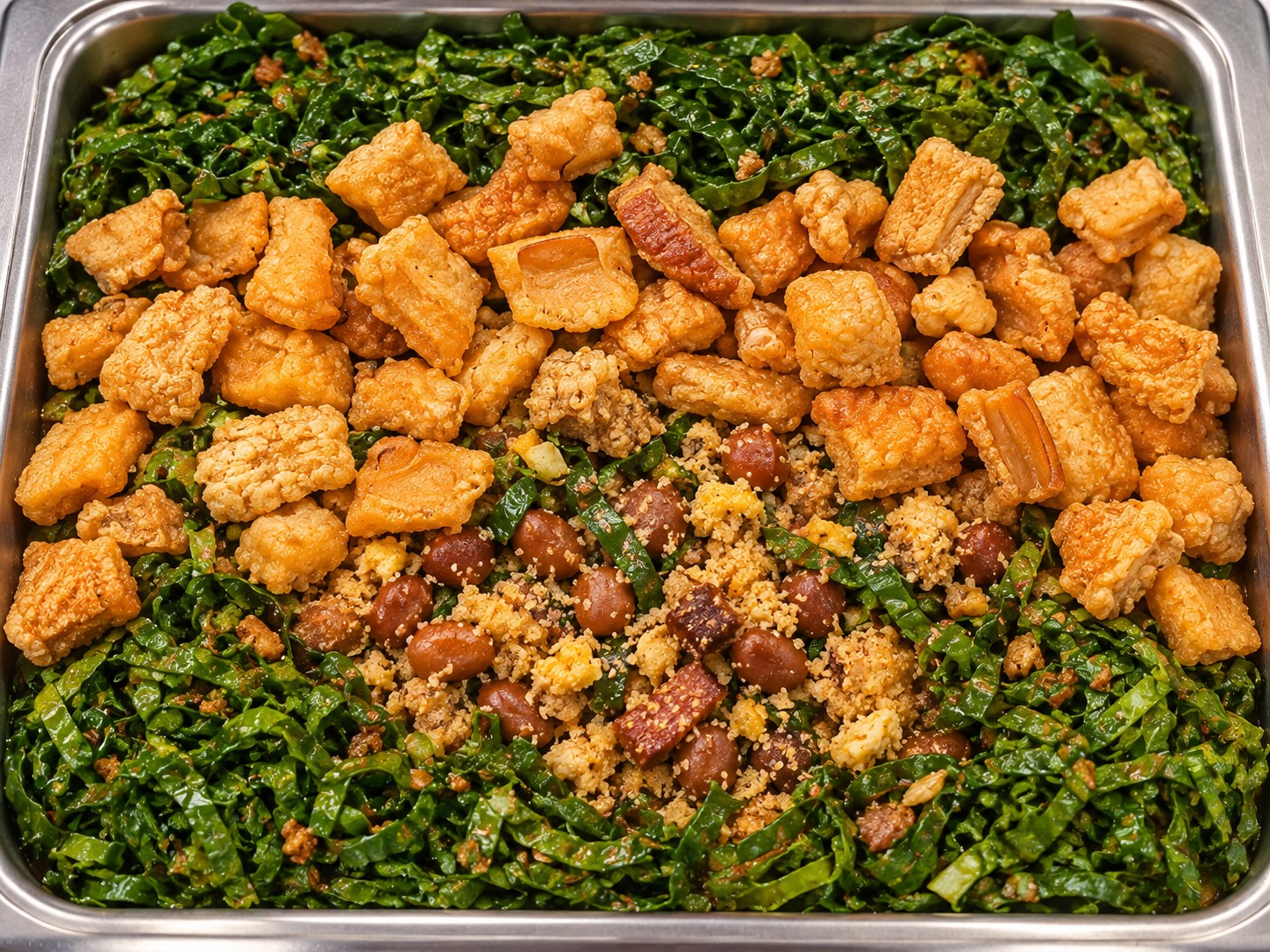
It comes with the picanha plate. Order pickup online, or call and we will have it ready.
Order pickup See the menu (978) 855-6347A dish from Minas Gerais: cooked beans drained and fried with pork fat, garlic, bacon, sausage, egg, collard greens and cassava flour, all finished in the same pan. Dry, not soupy.
Tropeiros were the men who moved goods across Brazil on mule trains in the 1700s and 1800s. The dish is made of what survived weeks on the road — dried beans, cured pork, cassava flour.
It comes with the PF Picanha plate, and it also appears in our hot lunch buffet.
No. Tutu is mashed beans thickened with cassava flour, soft and creamy. Tropeiro is dry and loose, with the beans whole.
Since October 11, 1994
Argemiro left the truck behind to be near his children. Salomé cooked the first plate — two reais and fifty cents. Since 1994, the same family serves the same food, now in Fitchburg too.
Read our story